When planning a sports court construction project, one of the most important considerations is the type of surface you choose. Whether it’s for tennis, basketball, netball, or multi-sports use, the surface plays a vital role in both player safety and overall performance. The right surface can reduce injury risks, improve comfort, and enhance gameplay — while the wrong one can lead to unnecessary strain, poor traction, and inconsistent results.
This guide explains how different court surfaces impact athletes’ performance, movement, and safety — and why professional planning and installation are key to getting the best results.
1. The Connection Between Surface Type and Player Safety
Every surface used in sports court construction interacts differently with the human body. The grip, hardness, and shock absorption all influence how players move and how their joints respond during play.
Shock Absorption
Surfaces with built-in cushioning layers reduce the impact on knees, ankles, and hips. This is especially important for younger players and school environments where repetitive jumping and running can cause long-term strain.
Traction and Grip
A good sports surface provides consistent traction to prevent slips, while still allowing smooth movement. Too much grip can cause twisted joints; too little can lead to dangerous falls.
Consistency and Evenness
Uneven or poorly maintained surfaces create tripping hazards and unpredictable ball behaviour. During professional sports court construction, the base must be perfectly level, and materials laid to strict tolerances to ensure player safety.
2. How Surface Type Affects Performance
Court surface choice doesn’t just influence safety — it has a major impact on how the game feels and how athletes perform.
-
Speed and Bounce: Hard courts generally offer faster ball speeds and predictable bounces, ideal for competitive tennis.
-
Control and Movement: Clay or synthetic surfaces slow the ball down, encouraging longer rallies and strategic play.
-
Footing and Agility: Surfaces designed for multi-sports courts need to balance grip and slide, supporting quick changes of direction without resistance.
Selecting the right surface allows athletes to develop their technique while reducing unnecessary fatigue or injury.
3. Common Surface Types in Sports Court Construction
Choosing the right surface is crucial for both performance and durability. Below are some of the most popular options used in modern sports court construction:
Acrylic Hard Courts
-
Characteristics: Smooth, fast-playing surface with consistent bounce.
-
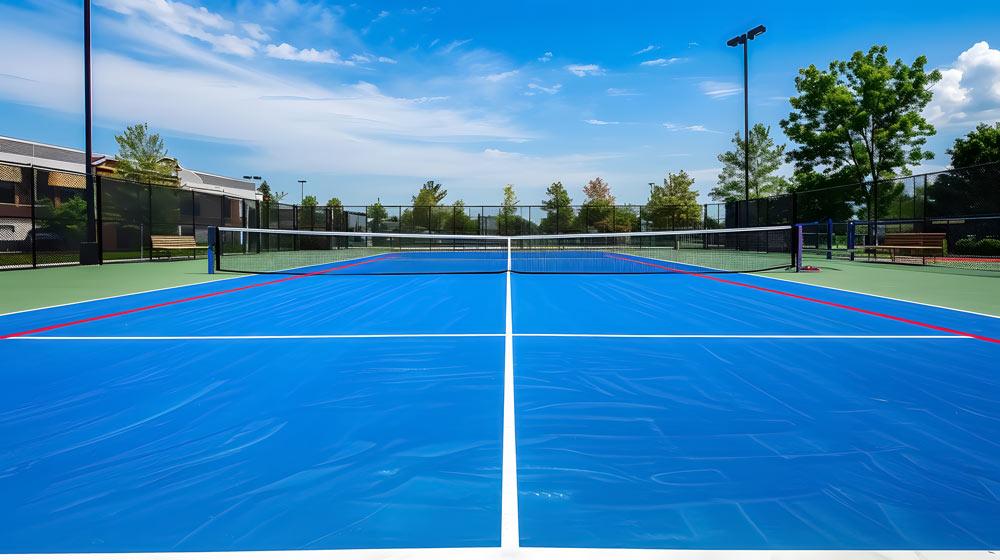
Benefits: Low maintenance, durable, and ideal for tennis, basketball, and netball.
-
Impact on Players: Offers reliable traction and moderate cushioning; suitable for schools and clubs.
Polymeric (Rubberised) Surfaces
-
Characteristics: Flexible, non-slip material made from layers of rubber and polyurethane.
-
Benefits: Excellent grip and shock absorption, making it one of the safest surfaces available.
-
Impact on Players: Reduces joint stress and prevents slips — ideal for children and high-intensity sports.
Artificial Turf
-
Characteristics: Synthetic grass designed to mimic the look and feel of real grass.
-
Benefits: Softer on joints and great for multi-sports use, including football and tennis.
-
Impact on Players: Provides comfort and cushioning, though can reduce traction in wet conditions if not maintained properly.
Macadam (Tarmacadam) Surfaces
-
Characteristics: A tough, hard surface often used as a base or standalone playing area.
-
Benefits: Long lifespan, minimal upkeep, and excellent drainage.
-
Impact on Players: Provides a firm surface for fast play but limited cushioning, making it less suitable for intensive training.
Each option offers different advantages depending on the intended use, budget, and desired level of play.
4. The Role of Maintenance in Safety and Performance
Even the best sports court construction can deteriorate without regular care. Dirt, moss, cracks, or worn line markings all pose safety risks and affect gameplay.
Regular Cleaning
Routine brushing and pressure washing prevent debris build-up, which can create slippery patches.
Repairs and Resurfacing
Cracks, fading, or water pooling should be addressed quickly. Resurfacing restores grip, colour, and performance, extending the court’s lifespan.
Drainage Systems
Proper drainage ensures water doesn’t collect on the surface. Pooled water can damage materials and increase the risk of slips.
By maintaining a consistent, well-kept surface, facilities preserve both player safety and the quality of play.
5. Tailoring the Surface to the Sport
Each sport places unique physical demands on players, which is why customisation is a key part of modern sports court construction.
Tennis
Tennis requires consistent ball bounce, good grip, and shock absorption for fast footwork. Acrylic or synthetic surfaces are ideal for all-weather play.
Basketball
Basketball courts need excellent traction and cushioning to support frequent jumping and landing. Polymeric or cushioned acrylic surfaces are preferred.
Netball
Netball demands high grip for sudden direction changes. A slightly textured surface helps prevent slips while maintaining player control.
Multi-Sports Use
Schools and clubs often benefit from multi-use courts designed for various activities. These surfaces balance speed, grip, and comfort, allowing tennis, football, and netball to share one space efficiently.
By matching surface specifications to the intended sports, facilities can optimise performance and extend the life of their investment.
6. Environmental and Weather Considerations
Weather and climate have a direct influence on court safety and performance. During sports court construction, the chosen surface should suit local conditions.
-
Rainy regions: Surfaces with good drainage and slip-resistant textures are essential.
-
Hot climates: Lighter colours and UV-resistant coatings reduce heat absorption.
-
Cold weather: Flexible materials that can expand and contract without cracking extend surface life.
Ignoring environmental factors can lead to faster degradation, reduced playability, and costly repairs.
7. Professional Installation: Why It Matters
Even the highest-quality materials won’t perform well without professional installation. Proper sports court construction ensures the surface layers bond correctly, the base is stable, and the final finish is smooth and even.
Benefits of Professional Installation:
-
Correct slope and drainage for weather resistance.
-
Optimal surface texture for grip and performance.
-
Compliance with sports regulations and safety standards.
-
Reduced risk of early wear, cracks, or uneven bounce.
Working with experienced installers guarantees the court performs as intended, offering safe, reliable play for years to come.
8. Long-Term Value and Player Development
A well-chosen and properly constructed court surface benefits more than just the current users — it supports long-term player development and institutional value.
-
Safe, consistent surfaces build player confidence and reduce downtime due to injury.
-
Reliable performance conditions enable schools and clubs to host competitions.
-
Facilities with high-quality courts enhance their reputation and attract new members or students.
When viewed as a long-term investment, sports court construction that prioritises the right surface delivers both financial and athletic rewards.
Conclusion
The choice of surface is at the heart of every successful sports court construction project. It determines how safe, enjoyable, and long-lasting the court will be. From shock absorption and traction to performance and durability, each factor influences how players move, train, and compete.
By carefully selecting the right material, ensuring professional installation, and maintaining it properly, schools, clubs, and sports facilities can create courts that not only look great but also protect players and elevate their performance year after year.